
This is the first post of the New Year, 2020, so you deserve some good wishes: may we, may you, keep living happily and peacefully. Looking at what’s happening around us, I think that peace may matter most. Peace is health too. So, all the best.
It’s my first New Year post, and keep your fingers crossed that it won’t be the last. From what I can see, the trend has been downwards year on year. Last year there were probably only two or three recipes, so please wish me an upward trend this year. Over the past two years, things have generally been going downhill in every area. Though lately, I hope, they’re starting to improve. I’m an expert in a new field, and the food bike is almost ready; this year we’ll try to get it up and running. Fingers crossed.
If you followed Prymitywna’s Facebook page over the past year, which is a little more active than the new posts here, you’ll know that for the first time in my life I prepared Christmas Eve dinner myself. And almost all of Christmas Day too. Quite a challenge: I felt as though I was catering for my mate’s fortieth birthday again 🙂 Though, honestly, by Christmas Day I was beginning to flag. But I think it turned out pretty well: there were even more than 12 Christmas Eve dishes. As Ninka was there for lunch and actually stayed for half the evening meal, we started with a vegetarian lunch (cream of garlic soup, fresh basil pesto and, for dessert, an extraordinary mango cheesecake whose recipe I may post here soon). Only then came the main event: dinner, with beetroot soup and little uszka dumplings filled with sauerkraut and mushrooms, mashed potatoes with green peas and a cod fishball. After that it was plain sailing: a wonderful vegan bigos baked in the oven — sic! — that I’d never made that way before, and yes, I promise that recipe too; lentil pâté, poppy-seed strudel, very spicy Brussels sprout and kale bigos, pan-fried button mushrooms, and some really good Christmas herring, though this time one version followed a new, sweet recipe I’d invented. It was a lot of work, but worth it, because everyone enjoyed the food.
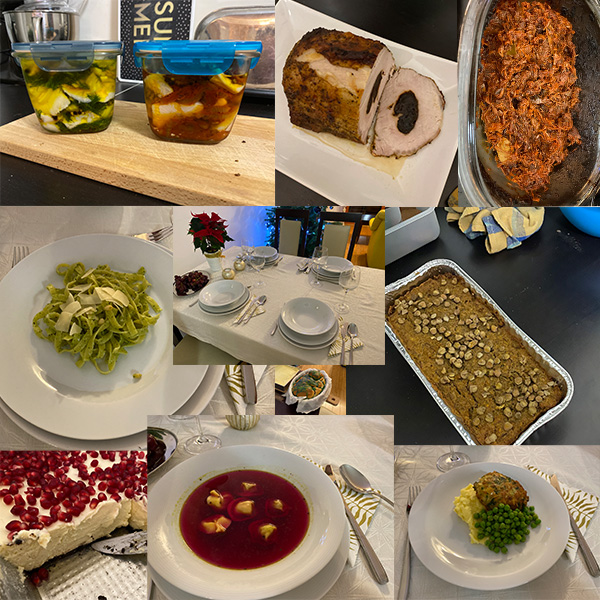
And then there was this pâté as part of the Christmas feast. It was my first duck pâté, and I made it as I saw fit, without using a recipe. I’ll say, immodestly, that it was a hit. Not just with me, but with everyone, literally everyone who tried it. Even up against Dad’s pâté, it won hands down. I’m proud of it, which is why it earned the name deluxe pâté. If something beats my dad’s pâté, it definitely has to be deluxe. I really do encourage you to try this recipe: it could cause quite a stir and a pleasant surprise at your Carnival-season house parties.
Of course, all this meant plenty of overeating at Christmas. But you know what? I’ve noticed that when you do so much of the cooking yourself, it somehow doesn’t go straight to your waist. All that exhaustion has its benefits.
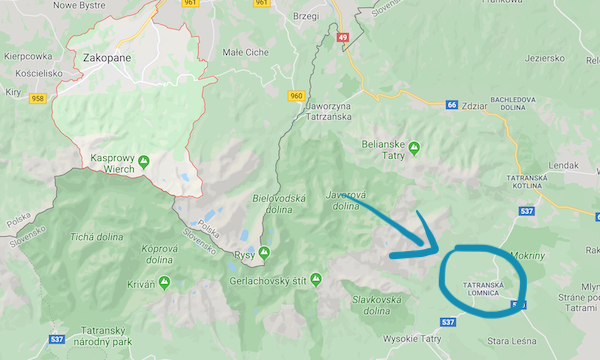
Still, to ease my conscience about Christmas, I’d planned some skiing afterwards. Just three quick things about that. First: why do you people go to Zakopane? If you go, that is. Literally on the other side of the Tatras, across the border, there’s the most beautiful little ski resort, with wonderfully prepared slopes, snow every time and a charming town. Now I’ll sound unpatriotic, though not entirely: taking some pressure off Zakopane is a kind of patriotism too, don’t you think? In my view, it’s the nicest resort this close to Warsaw 🙂 Tatranská Lomnica. Go and try it, all of you. Prymitywna Kuchnia has been twice and thoroughly recommends it. It’s not Italy, admittedly, but it’s close and they speak our kind of language 😉
Second, it was wonderful. Skiing every morning, relatively early, then FIFA 20 tournaments — we had a big screen and a projector, and I won a bed 🙂 — and then fun. I’d like to add here that I love Hotel Sasanka. I said it many times on the trip, but I’ll say it again publicly and officially: I love Hotel Sasanka. Only two stars, admittedly, and merely decent food, but 100 metres from the lift and exceptionally friendly staff. Apart from one cleaner who reported us for breaking a bed instead of cleaning the room 😉 Above all, though, I love Hotel Sasanka because its prices were worked out by Zuzana Martinkowa (already a legendary figure among us; everyone wants to know who she is and what she looks like). Anyone who followed Facebook knows what I’m talking about 🙂
And third, besides the wonderful views, conditions and skiing,

you might not catch a duck for your pâté in Tatranská Lomnica in the evening, but you can stumble entirely by chance upon a set by Slovakia’s best DJ, EKG, and discover the extraordinary warmth of the Slovak people.
So I recommend the place, just as I recommend this recipe for duck pâté, deluxe edition 🙂
At a glance:
Preparation time: terribly long, about 3 hours
Baking time: 50 minutes
Baking temperature: 180 degrees Celsius
Serves: with a delicacy like this, small portions would stretch to a modest wedding
Calories: why do you think pâté is called pâté? It’s got too much of everything 😉
Ingredients for wonderful festive duck pâté:
- 1 whole duck
- 2 duck legs
- 1 duck breast
- 3 hen’s eggs
- 10 large button mushrooms
- 40 dag poultry liver (chicken liver)
- 1 good-sized celeriac
- 2 large carrots
- 1 good-sized parsley (root)
- 1 medium onion
- 1 medium-sized piece of leek
- a small bunch of fresh coriander
- 1 stale wheat bread roll
- black pepper
- 6 slices of smoked pork backfat coated in pepper (mine was Lithuanian; you can buy it in shops here)
- salt
- dried marjoram
- nutmeg
- a little butter and breadcrumbs (for preparing the tin)
Recipe for deluxe duck pâté:
The recipe isn’t really difficult, but it is laborious. In other words, there’s work involved, though not 4 solid hours of it: the duck simply needs to cook for a long time.
From the beginning, then. I started by jointing the duck, which wasn’t easy because, embarrassingly, it was the first time I’d done it in my life. But I managed: I cut off the legs, wings and breasts, then cut what remained in half. I washed the jointed duck and did the same with the extra breast and duck legs. Everything went into a huge stockpot, and I started cooking it, exactly as if I were making duck broth. That meant skimming it every so often. Once the scum had stopped forming, I added the vegetables: the charred onion, celeriac, parsley root, carrots and leek, along with a not-too-large bunch of fresh coriander. I also added a few black peppercorns. I cooked it all for about 1.5–2 hours. The result was a very, very fatty broth.
While the duck was cooking, I fried the poultry liver in a frying pan, seasoning it only lightly with pepper and salt. About halfway through frying, I added the mushrooms, cut into fairly large pieces. Just remember: don’t overcook the liver. It should be cooked through but tender. That’s when it’s best.
I prepared the tin — I’d bought a smart non-stick one, as you can see in the photo, highly recommended — by buttering it and coating the base and sides with breadcrumbs 🙂
And now the most interesting part begins. Once the broth was ready, I took out all the meat and left it to cool a little. When it was warm but no longer hot, I carefully removed the bones and put the meat and skin into a bowl. Basically, everything except the bones should end up in the bowl. If we cook the duck for a long time, most of the fat renders out and stays in the broth, which I’ll come back to later. Meanwhile, I put the whole stale roll into the broth, cut into 3–4 pieces; they don’t have to be equal.
I put the meat and skin through the meat grinder twice, using the finest plate. That wasn’t easy. Once-minced duck is very sticky, so grinding it again isn’t particularly pleasant, but what won’t you do to earn the “deluxe” label? Though I do have a friend who loves that particular job. Once the meat was minced, I ground the soaked roll, all the vegetables from the broth — every last one; only the liquid and fat should remain — and the liver with the mushrooms into the same bowl. I mixed everything thoroughly and seasoned it with salt, pepper and nutmeg. I added about a glass, perhaps a little more, of the fatty duck broth, meaning the water we’d cooked it in, to stop the pâté being too dry. At this stage, taste after seasoning and mixing. It should be salty and peppery enough for your liking, so keep tasting and adjusting, including after adding the fatty duck broth.
proTIP: It’s worth saying here that, when seasoning, you’re better off relying on someone whose taste is balanced somewhere between “so saaaalty” and “I’ll sweat, but I’ll eat it anyway”. It’s also better to underseason at first and add more as you taste. Unfortunately, Jacek turned up as my taste tester, not entirely by chance. He likes things well salted, so it’s a good thing I was standing beside him. Yes, the same Jacek whose 40th birthday I catered for, and the same one who thinks gaining 1 kg — in words, one kilogram — over Christmas is a greater tragedy than having hit forty.
Then I cracked 3 hen’s eggs into the mixture and stirred. From this point on, no more tasting, so make sure it’s properly seasoned before adding the eggs. I mixed it very thoroughly. Almost there, almost…
I poured the mixture into my large tin, with enough left for a second, smaller one, levelled the surface with a spoon and decorated the top, as the photos show, with Lithuanian smoked pork backfat coated in pepper, 6–7 slices. Then I sprinkled dried marjoram thoroughly over the whole thing.
I put the prepared duck pâté mixture into an oven preheated to 180 degrees Celsius for about 45–50 minutes. Keep an eye on the top to make sure it isn’t burning: every oven is different. Afterwards, I let it cool, and voilà. Deluxe duck pâté is ready. Tuck in. Enjoy!


STRAIGHT TO YOUR INBOX
New recipe? I’ll let you know.
Sign up to get the next recipe in your inbox.


